
An environmental management system (EMS) is a strategic framework that helps organizations manage their environmental responsibilities, reduce their ecological impact, and comply with evolving regulations. The two most recognized EMS standards are the EU's Eco-Management and Audit Scheme (EMAS) and ISO 14001, now in its 2026 edition.
- Key Facts at a Glance
- Definition and Core Framework
- Eco-Management and Audit Scheme (EMAS)
- ISO 14001
- EMAS vs. ISO 14001: Key Differences
- Central Elements of Environmental Management
- How to Measure Environmental Performance
- How to Implement an Environmental Management System
- Benefits for Companies
- Our Software Solutions for Your Environmental Management System
- Frequently Asked Questions
Environmental Management System: Key Facts at a Glance
-
An EMS is a structured framework for managing and continuously improving an organization's environmental performance — the leading standards are EMAS and ISO 14001.
-
ISO 14001:2026 was published on April 15, 2026, replacing ISO 14001:2015; organizations certified to the 2015 version have until May 2029 to transition.
-
EMAS is an EU-specific voluntary scheme requiring a publicly verified environmental statement, while ISO 14001:2026 applies globally with more flexible reporting requirements.
-
Life cycle assessment (LCA) is the primary tool for quantifying environmental impacts across the full product life cycle within an EMS.
-
Organizations registered under EMAS can leverage their verified environmental statements to meet CSRD reporting requirements under the European Sustainability Reporting Standards (ESRS).
Definition and Core Framework
An environmental management system is a holistic strategic framework through which companies commit to higher quality standards in eco-efficiency, eco-effectiveness, and environmental protection. It encompasses policies, procedures, and practices that help organizations systematically identify, monitor, and reduce their environmental impact — from raw material procurement through to waste disposal and end-of-life management.
Environmental management systems consist of multiple subsystems, including pollution control, waste management, energy monitoring, and supplier assessment. What links them all is a shared operational logic: the PDCA cycle — Plan, Do, Check, Act.
Under this model, organizations first plan their environmental objectives and identify relevant impacts (Plan), then implement measures and assign responsibilities (Do), monitor and audit performance against set targets (Check), and finally take corrective action and update goals to drive continuous improvement (Act). This iterative approach is the backbone of both EMAS and ISO 14001 — and the reason both standards consistently produce measurable improvements over time.
Eco-Management and Audit Scheme (EMAS)
Developed by the EU, EMAS (Eco-Management and Audit Scheme) is a robust system designed to help organizations enhance their environmental performance and demonstrate their commitment to sustainability. To obtain an EU label under EMAS, organizations must meet the following requirements:
-
Continuous Improvement: EMAS requires organizations to commit to continuous improvement of their environmental performance. This involves implementing measures to reduce environmental impact over time.
-
Reporting on Environmental Targets: Organizations must report on the achievement of environmental targets set within their environmental management system. This ensures transparency and accountability in environmental efforts.
-
Validation by Independent Auditor: EMAS certification involves validation by an independent auditor to ensure compliance with legal environmental requirements. This validation provides credibility to the organization's environmental claims and demonstrates legal compliance.
EMAS provides a structured framework for organizations to manage and improve their environmental performance, offering both environmental and reputational benefits.
ISO 14001
ISO 14001 is a key component of the globally recognized ISO 14000 family of environmental management standards, offering a systematic approach to environmental management. It emphasizes continuous improvement to minimize environmental impact. The standard was significantly updated in 2026: ISO 14001:2026 was published on April 15, 2026, replacing ISO 14001:2015. The revision formally embeds climate action requirements, strengthens supply chain responsibilities, and introduces a dedicated change management clause — while preserving the familiar ten-clause structure. Certified organizations have until May 2029 to transition; after that date, ISO 14001:2015 certificates will no longer be valid.
Key components of ISO 14001 include:
-
General Requirements: ISO 14001 outlines general requirements for establishing an environmental management system (EMS) within an organization.
-
Environmental Policy: Organizations are required to develop and implement an environmental policy that sets out their commitment to environmental protection and compliance.
-
Implementation and Execution: ISO 14001 guides organizations in the implementation and execution of their environmental management system, including identifying environmental aspects and establishing objectives and targets.
-
Control and Corrective Actions: The standard emphasizes the need for control measures and corrective actions to address any deviations from the environmental policy and objectives.
-
Evaluation by Top Management: ISO 14001 requires evaluation and review by top management to ensure the effectiveness of the EMS and to drive continual improvement.
ISO 14001 provides a structured framework for organizations to manage environmental responsibilities effectively, leading to improved environmental performance and compliance with regulatory requirements.
EMAS vs. ISO 14001: Key Differences
Both EMAS and ISO 14001 provide credible frameworks for environmental management, but they differ meaningfully in scope, stringency, and geographic applicability. The most important distinctions:
-
Geographic scope: EMAS applies exclusively to organizations operating within the EU. ISO 14001:2026 is a global standard with more than 500,000 certificates issued across 180+ countries.
-
Public disclosure: EMAS mandates an annual, publicly available environmental statement verified by an independent accredited auditor. ISO 14001 has no equivalent mandatory public reporting requirement.
-
Legal compliance: EMAS explicitly requires verified compliance with all applicable environmental legislation. ISO 14001 requires organizations to evaluate compliance but does not demand formal external verification.
-
Stringency and recognition: EMAS is generally considered the more demanding standard. ISO 14001 is more widely adopted due to its international recognition and greater operational flexibility.
Many organizations in the EU pursue both: ISO 14001:2026 certification provides global market recognition, while EMAS registration adds the layer of verified public accountability that regulators and stakeholders increasingly expect.
Central Elements of Environmental Management
Regardless of the standard chosen, all environmental management systems share very similar key elements:
- Definition of environmental goals and strategies to reach them
- Quantification and evaluation of operational environmental performance
- Consideration of the entire life cycle of products (upstream and downstream environmental impacts)
- Planning, execution and control of tangible improvement measures
How to Measure Environmental Performance
To define achievable environmental goals, knowledge about current environmental performance is a necessary first step. The relevant environmental aspects must be made measurable. Especially for the quantification of environmental performance and a life cycle approach, organizations must evaluate numerous data points, figures, and facts.
Environmental Indicators
To make the strategy for achieving targets verifiable, organizations must derive specific environmental indicators. In the EMAS environmental management system, for example, these are divided into six key areas:
- Energy efficiency
- Material efficiency
- Water
- Waste
- Biological diversity
- Emissions
Additionally, it is essential to identify all possible interfaces between a business and the environment and to quantify them. This helps in understanding the environmental impact across the organization's operations and processes, facilitating informed decision-making and effective environmental management.
Assessing Environmental Performance over the Entire Life Cycle
Assessing environmental performance over the entire life cycle has become increasingly important, particularly since the ISO 14001 revisions in 2015 and 2026. The updated standard mandates quantification and evaluation of improvement measures on a site-specific basis and emphasizes the importance of adopting a life cycle perspective, as it is also applied in the Circular Economy.
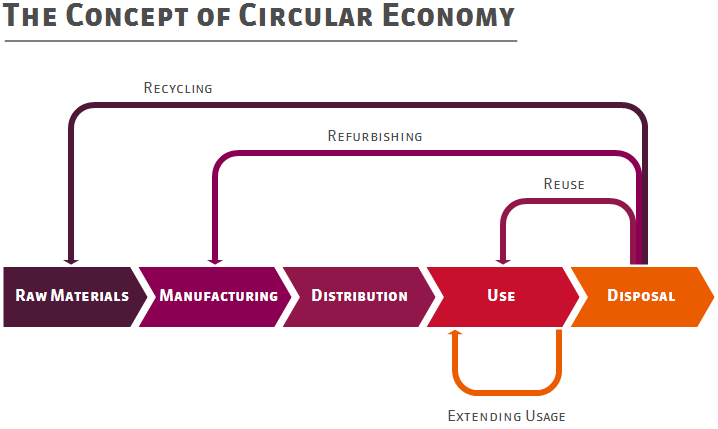
This approach aims to go beyond assessing direct environmental impacts within the company to also considering indirect impacts along the entire supply chain. It involves evaluating environmental aspects from the extraction of raw materials, through production and use, to end-of-life disposal or recycling.
By considering the entire life cycle, organizations can better understand and address their full environmental footprint, leading to more comprehensive and effective environmental management practices.
How to Implement an Environmental Management System
Implementing an EMS follows a clear, structured path — regardless of whether the target is EMAS registration or ISO 14001:2026 certification. The core steps are:
-
Identify environmental aspects: conduct a systematic review of all activities, products, and services to determine which ones interact with the environment and to what degree.
-
Define the environmental policy: document the organization's commitments to environmental protection, legal compliance, and continuous improvement — and communicate this policy internally and externally.
-
Set objectives and targets: translate the environmental policy into measurable goals with defined timelines, responsibilities, and resources.
-
Implement operational controls: establish procedures, roles, and training programs to ensure environmental considerations are embedded in daily operations.
-
Monitor and audit: track performance against targets using environmental indicators, conduct internal audits, and evaluate compliance with applicable legal requirements.
-
Review and improve: top management reviews EMS performance at regular intervals, drives corrective actions, and updates objectives to sustain the continuous improvement cycle.
Once these steps are consistently applied and documented, the organization can seek formal certification from an accredited body. This typically involves a two-stage audit: a documentation review followed by an on-site assessment.
Benefits for Companies
Implementing corporate environmental management successfully is a challenging task in any company. But the effort is worthwhile: establishing an environmental management system certified to ISO 14001:2026 or registered under EMAS leads to a clear competitive advantage, since various stakeholders expect companies not only to commit to sustainability, but also to implement environmental protection operationally.
Beyond reputation, an EMS delivers concrete operational benefits. Systematic monitoring of energy, water, and material use typically reveals efficiency gains that reduce costs. Documented legal compliance reduces the risk of regulatory penalties. A certified EMS also signals to customers, investors, and procurement teams that environmental management is embedded in business processes — not merely stated in a policy document.
There is also a direct link to sustainability reporting: organizations registered under EMAS can leverage their verified environmental statements to satisfy reporting obligations under the EU's Corporate Sustainability Reporting Directive (CSRD) and the associated European Sustainability Reporting Standards (ESRS). This integration reduces the documentation burden for companies subject to both frameworks, making dual compliance significantly more efficient.
Our Software Solutions for Your Environmental Management System
Our software solutions offer comprehensive support for environmental management, focusing on life cycle assessment (LCA) and environmental product declarations (EPD), as well as product carbon footprints (PCF) and corporate carbon footprints (CCF), enhancing both product and corporate sustainability. Driven by data, our solutions are designed to meet the evolving needs of businesses striving for environmental excellence.
Umberto – Software for Life Cycle Assessment (LCA) Experts
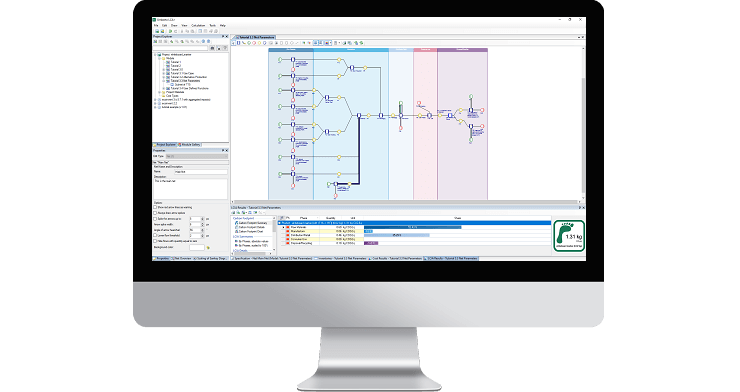
Our goal is to support your environmental management system with professional software that calculates environmental impacts over the entire life cycle of your products. Our LCA software Umberto provides support at every stage of ISO 14001:2026, making environmental performance and improvement transparent to internal and external stakeholders. It facilitates the evaluation of options, forming the database for your decisions to achieve reduction targets.
Additionally, Umberto is invaluable in environmental audits (eco-audit), checking your company's interfaces with the environment. It promotes the continuous improvement process by helping you achieve environmental goals and document your progress toward ISO 14001:2026 certification.
IPOINT Product Sustainability – Integrate LCA into Your Business
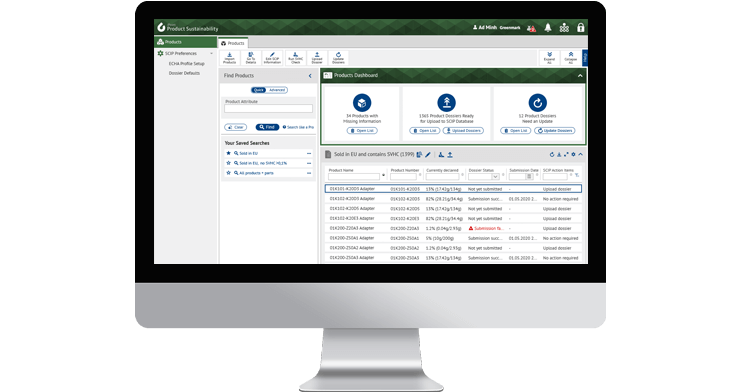
Discover our holistic product sustainability software, which combines sustainability and compliance aspects for a comprehensive environmental management approach. It automates life cycle assessment and carbon footprinting through predefined parameterized LCA models using Umberto as the calculation engine, integrates with business workflows (e.g., BOM import and ERP interface like SAP), and combines material compliance and sustainability information to enhance responsible product stewardship.
Frequently Asked Questions
What is the environmental management system?
An environmental management system (EMS) is a structured framework that helps organizations systematically manage their environmental impacts, comply with regulations, and continuously improve their environmental performance. The most widely used EMS standards are ISO 14001:2026 and the EU's EMAS (Eco-Management and Audit Scheme).
What are the 4 components of EMS?
The four core components of an EMS are: environmental policy (defining commitments), planning (setting objectives and identifying environmental aspects), implementation (operational controls, training, and responsibility assignment), and performance evaluation with corrective action (monitoring, auditing, and management review). Together, they form the PDCA cycle that drives continuous improvement.
What is ISO 14001 environmental management system?
ISO 14001 is the internationally recognized standard for environmental management systems. Its current version, ISO 14001:2026, was published on April 15, 2026, and provides a framework for organizations to control environmental impacts, ensure legal compliance, and demonstrate continuous improvement. More than 500,000 certificates have been issued across 180+ countries.
What is the difference between EMAS and ISO 14001?
EMAS applies only within the EU and requires a publicly verified environmental statement and confirmed legal compliance, verified by an independent auditor. ISO 14001:2026 is a global standard with broader reach and more flexible reporting requirements. Many European organizations pursue both certifications to maximize credibility and meet regulatory expectations.
How does an EMS support CSRD compliance?
Organizations registered under EMAS can directly leverage their verified environmental statements to satisfy reporting requirements under the EU's Corporate Sustainability Reporting Directive (CSRD) and the European Sustainability Reporting Standards (ESRS). This significantly reduces the additional documentation burden for companies subject to both frameworks.
How long does ISO 14001 certification take?
Most organizations achieve initial ISO 14001 certification within six to twelve months after starting EMS implementation. The process typically involves a documentation review (Stage 1 audit) followed by an on-site assessment (Stage 2 audit) conducted by an accredited certification body.