Many companies focus exclusively on carbon footprint—and miss critical environmental trade-offs that drive regulatory risk, cost increases, and reputational damage. A product with low greenhouse gas emissions might deplete scarce water resources or generate toxic waste. Life Cycle Assessment (LCA) impact categories reveal these trade-offs by translating inventory data into environmental consequences across climate, ecosystems, human health, and resources. With dozens of possible categories and multiple methodologies, selecting the right approach requires a strategic understanding of assessment goals and stakeholder expectations.
This guide explains what environmental impact categories are, presents the most common categories across standardized methodologies, demonstrates selection criteria for different products, and reveals how professional LCA software enables systematic multi-category assessment.
- LCA Impact Categories: Key Facts at a Glance
- What Are LCA Impact Categories?
- The Most Common Environmental Impact Categories in LCA
- Impact Categories vs. Indicators: Understanding the Difference
- How to Choose the Right LCA Categories for Your Products
- Common LCIA Methods and Their Impact Categories
- Pitfalls When Interpreting Results
- IPOINT's LCA Solutions: Navigate Complexity With Confidence
- From Single Metrics to Strategic Sustainability Intelligence
- FAQ
LCA Impact Categories: Key Facts at a Glance
-
Environmental consequences: Impact categories translate Life Cycle Inventory data into measurable environmental consequences affecting climate, ecosystems, human health, and natural resources.
-
Standard methodologies: Standard methodologies, including ReCiPe, CML, PEF/EF 3.1 (an EF Database 4.0 has been announced), and TRACI, define category sets with validated characterization factors.
-
Strategic selection: Strategic selection determines which categories to include based on product type, life cycle stages, geography, and regulatory requirements.
-
Distinct concepts: Categories and indicators are distinct—categories represent environmental impacts, while indicators provide measurement units.
-
Software-driven compliance: Professional software enables systematic assessment across multiple categories while maintaining ISO 14040/14044 compliance.
What Are LCA Impact Categories?
Life Cycle Impact Categories represent environmental consequences from product-related emissions and resource consumption. During Life Cycle Impact Assessment (LCIA)—the third LCA phase per ISO 14040/14044—inventory data transforms into quantified environmental impacts.
Raw Life Cycle Inventory data lists hundreds of substance flows, including CO₂, nitrogen oxides, phosphates, and heavy metals. Impact categories organize these flows by environmental consequence type, enabling structured assessment of how products affect climate, ecosystems, health, and resources. LCIA occurs after inventory analysis and before interpretation, translating emissions into environmental significance.
Different LCIA methods (ReCiPe, CML, PEF/EF 3.1 [an EF Database 4.0 has been announced], TRACI) define different category sets and calculation models. The method selection substantially influences which environmental consequences assessments capture.
The Most Common Environmental Impact Categories in LCA
Certain categories appear consistently in standardized frameworks. The following tables present 13 essential categories grouped thematically.
Climate & Air Quality
| Impact Category | What It Measures | Common Indicator/Unit | Example Sources |
|---|---|---|---|
| Climate Change | Greenhouse gas emissions causing atmospheric warming | kg CO₂ eq | Fossil fuel combustion, methane, industrial processes |
| Ozone Depletion | Stratospheric ozone layer destruction | kg CFC 11 eq | Refrigerants, aerosols, industrial solvents |
| Acidification | Acid rain formation | kg SO₂ eq or mol H⁺ eq | SO₂, NOx from combustion, agricultural ammonia |
| Photochemical Ozone Formation | Ground-level smog creation | kg NMVOC eq | Vehicle emissions, solvents, fuel evaporation |
| Particulate Matter | Fine particles causing respiratory impacts | Disease incidence (PM2.5 eq) | Combustion, construction dust, industrial emissions |
Water & Land
| Impact Category | What It Measures | Common Indicator/Unit |
Example Sources |
|---|---|---|---|
| Eutrophication (Freshwater) | Nutrient enrichment causing algae blooms | kg P eq | Agricultural runoff, wastewater, detergents |
| Eutrophication (Marine) | Nutrient pollution in coastal waters | kg N eq | Agricultural nitrogen, atmospheric deposition |
| Water Use/Scarcity | Freshwater consumption in stressed regions | m³ water eq (method-dependent) | Irrigation, industrial cooling, processes |
| Land Use | Land occupation and transformation | m²a (land occupation) / m² (land transformation) | Agriculture, mining, infrastructure |
Human Health & Toxicity
| Impact Category | What It Measures | Common Indicator/Unit | Example Sources |
|---|---|---|---|
| Human Toxicity (Cancer) | Toxic exposure causing cancer risks | CTU (Comparative Toxic Units) | Heavy metals, persistent pollutants, carcinogens |
| Ecotoxicity (Freshwater) | Toxic impacts on aquatic ecosystems | CTU | Pesticides, heavy metals, chemical spills |
Resources
| Impact Category | What It Measures | Common Indicator/Unit | Example Sources |
|---|---|---|---|
| Fossil Resource Depletion | Non-renewable energy consumption | MJ or kg oil eq | Coal, crude oil, natural gas extraction |
| Mineral Resource Depletion | Scarce mineral extraction | kg Sb eq | Metal ores, rare earth elements |
Additional categories include ionizing radiation, terrestrial eutrophication, and method-specific categories.
Impact Categories vs. Indicators: Understanding the Difference
LCA frameworks differentiate clearly between the type of impact and how it is measured:
-
Impact categories: Define environmental consequence types—climate change, acidification, and eutrophication.
-
Indicators: Provide measurement units—kg CO₂ eq for climate change, kg SO₂ eq for acidification, and kg P eq for freshwater eutrophication.
Example: Climate Change (category) uses Global Warming Potential in kg CO₂ equivalents (indicator). Greenhouse gases convert through characterization factors: methane (fossil) = 29.80 kg CO₂ eq/kg, nitrous oxide = 273 kg CO₂ eq/kg (Sixth Assessment Report AR6).
Proper indicator usage enables accurate communication. "Our product has low climate change" lacks meaning, whereas "our product generates 50 kg CO₂ eq per functional unit" provides quantified, comparable information.
How to Choose the Right LCA Categories for Your Products
Strategic selection balances comprehensiveness against resource constraints.
Assessment purpose
-
Screening LCAs: 3–5 dominant categories
-
Environmental Product Declarations: comprehensive sets per Product Category Rules
-
Comparative assertions: identical categories across products
Product characteristics
-
Energy-intensive (electronics, appliances): Climate Change, Fossil Depletion dominate
-
Water-intensive (beverages, textiles): Water Use/Scarcity critical
-
Agricultural products: Eutrophication, Land Use, Toxicity significant
-
Chemical products: Human Toxicity, Ecotoxicity essential
Life cycle stage dominance
-
Use-phase energy consumption: prioritize Climate Change
-
Manufacturing-intensive: emphasize resource depletion, production emissions
-
Complex end-of-life: requires toxicity assessment
Geographic location
-
Water-stressed regions: Water Use gains importance
-
Regional methods: TRACI for North America, PEF for Europe incorporate geographic specificity
Regulatory requirements
-
Product Environmental Footprint: 16 specified categories
-
Construction EPDs: EN 15804 categories
-
Corporate reporting: multi-category beyond carbon
Materiality: Preliminary screening identifies significant contributors. Categories with less than 1–2% contribution may be excluded with documentation.
Example: Steel product → Climate Change (energy), Acidification (SO₂), Fossil Depletion (coke) highly relevant. Water Use is less material unless it's a water-stressed production.
Common LCIA Methods and Their Impact Categories
LCIA methods provide standardized frameworks ensuring consistent calculation.
-
ReCiPe 2016: 17 midpoint + 3 endpoint categories, global use
-
CML: Midpoint-focused, Leiden University
-
PEF/EF 3.1: (an EF Database 4.0 has been announced): European Commission framework, 16 categories
-
TRACI: US EPA method, North American conditions
Methods differ in category numbers, models, and geographic scope. Practitioners can customize with proper ISO 14044 documentation.
To learn more about these methodologies, see our blog post: Life Cycle Impact Assessment (LCIA) Methods.
Pitfalls When Interpreting Results
Multi-category assessment introduces interpretation challenges that can undermine the credibility of the results and lead to flawed decision-making.
-
Overfocus on single categories: Optimizing only Climate Change ignores Water Use or Toxicity trade-offs.
-
Incomparable category sets: Product A (16 categories) versus Product B (6 categories) produces invalid comparisons.
-
Indicator confusion: Mixing units (kg CO₂ eq + kg SO₂ eq) lacks scientific meaning.
-
Ignoring uncertainty: Climate Change achieves high confidence; Toxicity involves greater model uncertainty.
-
Neglecting sensitivity analysis: Testing assumption variations reveals result robustness.
Professional LCA software with built-in validation checks and standardized workflows helps prevent these common errors while maintaining methodological rigor.
IPOINT's LCA Solutions: Navigate Complexity With Confidence
Numerous impact categories, multiple LCIA methods, various tools (Life Cycle Assessments (LCA) , Environmental Product Declarations (EPD), Product Carbon Footprints (PCF)), different boundaries, and individual product complexities create overwhelming combinations. Organizations need solutions that align methodological rigor with product-specific requirements while scaling across entire portfolios—and that's where Umberto comes in.
IPOINT's Umberto LCA Software
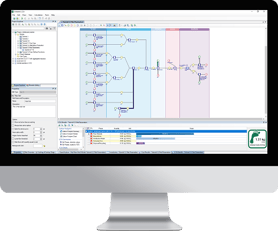
Umberto provides the flexibility to map your individual methodological setup precisely—regardless of LCIA method, system boundary, or product complexity. Rather than forcing predefined standard processes, Umberto adapts to your specific structure and delivers full transparency for ISO-compliant LCAs, PCFs, and EPDs.
Key capabilities:
-
Full support for ReCiPe, CML, PEF/EF 3.1 (an EF Database 4.0 has been announced), TRACI, and custom methodologies
-
Visual flow modeling across life cycle stages
-
Integrated characterization factors from validated databases
-
Scenario analysis comparing alternatives
-
ISO 14040/14044 compliant workflows
-
Transparent audit documentation
Transform Multi-Category Complexity into Strategic Capability
Navigate category selection, LCIA application, and multi-product assessment with professional tools providing flexibility, automation, and compliance.
IPOINT Product Sustainability
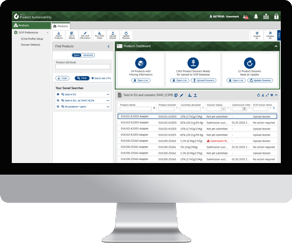
Umberto's production models can be configured generically and parametrically, enabling automated application across different products. IPOINT Product Sustainability uses Umberto as its calculation engine, systematically scaling validated LCA models across entire product portfolios—from individual variants to thousands of SKUs.
Benefits:
-
Portfolio-wide multi-category assessment: Systematically scale your models across entire product portfolios.
-
Consistent methodology: Maintain identical calculation assumptions across variants.
-
Automated calculation: Re-calculate environmental footprints automatically as specifications change.
-
Scalable environmental intelligence: Turn raw product specifications into actionable corporate insights.
Scale Product Sustainability from Data to Decisions
Automate your life cycle assessments and integrate actionable sustainability data directly into your business processes to improve environmental performance at scale.
From Single Metrics to Strategic Sustainability Intelligence
Environmental impact categories provide the analytical framework for transforming raw life cycle data into actionable insights. Strategic category selection—balancing comprehensiveness, relevance, and resources—determines whether assessments reveal genuine improvement opportunities or miss critical trade-offs.
Professional LCA software eliminates the tension between methodological rigor and practical scalability, enabling organizations to systematically assess multiple impact categories across product portfolios and transform environmental analysis into embedded business intelligence.

Download the white paper and learn how Sustainability Intelligence turns product and supply-chain data into decision-ready insights - enabling faster decisions, scalable impact, and measurable progress across the entire product lifecycle.