
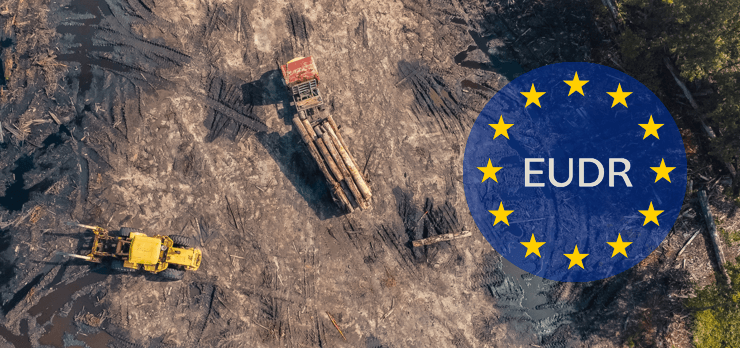
Deforestation and forest degradation linked to agricultural production and global commodity trade have become major regulatory concerns worldwide. To address the environmental impact of products placed on the European market, the European Union has introduced the EU Deforestation Regulation (EUDR) through Regulation (EU) 2023/1115. The regulation establishes binding rules to ensure that certain commodities and derived products made available on or exported from the EU are deforestation-free and legally produced.
For producers and other supply chain actors, the EUDR marks a fundamental shift. Market access to the European Union is now directly tied to the ability to demonstrate compliance through structured due diligence, documented risk assessment, and reliable supply chain information. The regulation therefore affects not only sustainability strategies but also legal responsibility, operational processes, and long-term business continuity in global markets.
Table of Contents
- EUDR Regulation: Key Facts at a Glance
- What Is the EU Deforestation Regulation (EUDR)?
- Scope of the EUDR: Products, Commodities and Countries
- Obligations for Operators and Traders Under the EUDR
- Due Diligence and Risk Assessment: Core of the EUDR
- Information Collection – Article 9
- Risk Assessment – Article 10
- Risk Mitigation – Article 11
- EUDR and Market Access: Why Compliance Is Business-Critical
- Short Update: Timeline and Delay of the EUDR
- How Digital Systems Support EUDR Compliance
What Is the EU Deforestation Regulation (EUDR)?
The EU Deforestation Regulation (EUDR) is a directly applicable EU regulation designed to ensure that products associated with deforestation or forest degradation do not enter or leave the EU market. It applies across all member states and introduces a harmonized compliance framework for companies operating within global supply chains.
Under the regulation, products must meet three cumulative conditions:
- They must be deforestation-free
- They must be produced in accordance with relevant legislation in the country of production
- They must be covered by a due diligence statement confirming compliance
The EUDR shifts responsibility to companies by requiring them to actively demonstrate compliance rather than relying on declarations from upstream suppliers alone.
Scope of the EUDR: Products, Commodities and Countries
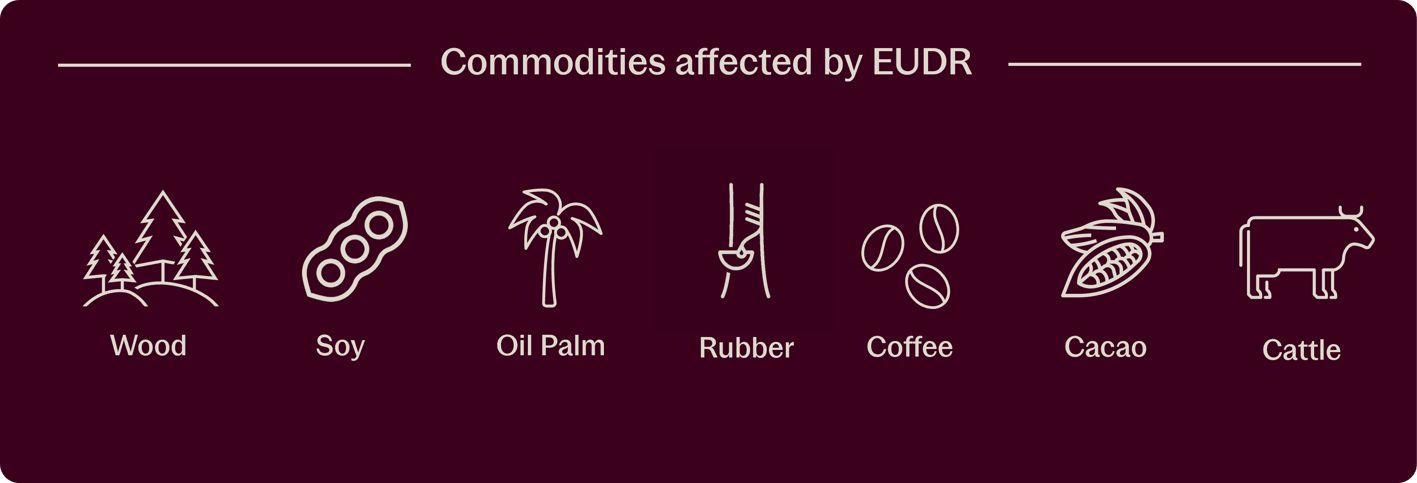
The scope of the EUDR covers commodities that are considered major drivers of global deforestation, including wood, cattle, soy, palm oil, coffee, cocoa, and natural rubber, as well as a wide range of products derived from these commodities.
The regulation applies to:
- Products placed on the EU market for the first time
- Products exported from the EU
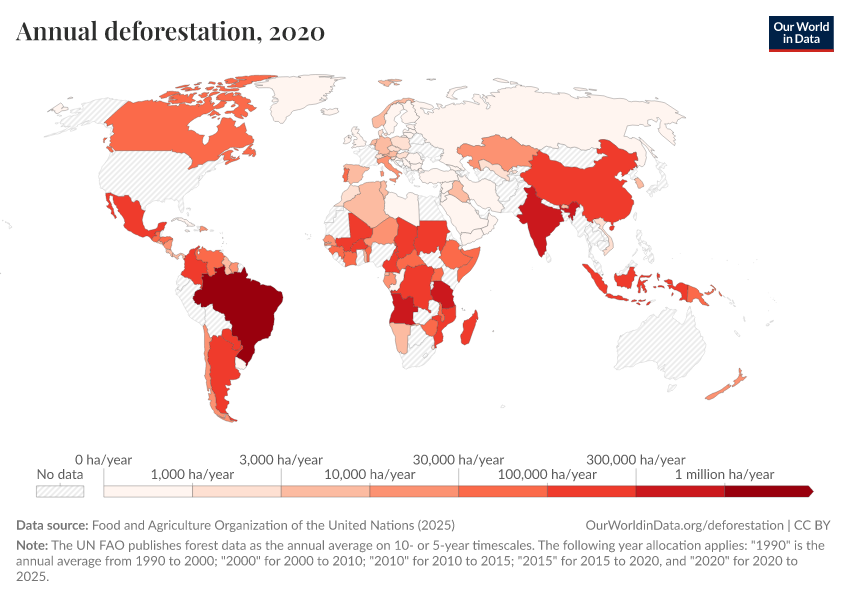
- Supply chains involving third countries worldwide
While countries are categorized by risk levels, obligations apply regardless of origin. Producers and operators must therefore maintain accurate information on production areas, land use, and supply chain structures to demonstrate that products do not originate from deforested or degraded forest land.
Obligations for Operators and Traders Under the EUDR
The EUDR defines specific responsibilities for operators and traders, depending on their role in the supply chain.
Operators are required to establish and operate a due diligence system that complies with the regulation. This includes the formal submission of a due diligence statement before products are placed on or exported from the EU market.
Traders must ensure that products they make available are covered by valid due diligence and that relevant information can be provided to authorities upon request. Even where obligations differ in scope, accountability applies across the supply chain.
Due Diligence and Risk Assessment: Core of the EUDR
The due diligence framework is the central mechanism of the EUDR and is structured around three key regulatory steps explicitly defined in the regulation:
Information Collection – Article 9
Companies must collect detailed information about the product, including:
- Commodity and product description
- Country of production
- Geolocation data of production plots
- Supplier and supply chain details
- Evidence of legal production
This information forms the factual basis for compliance.
Risk Assessment – Article 10
Based on the collected information, companies must assess the risk that products are not deforestation-free or not legally produced. The assessment considers factors such as:
- Country or regional risk classification
- Complexity of the supply chain
- Reliability of information sources
- Presence of deforestation or forest degradation risks
If the risk is more than negligible, products cannot be placed on the market without further action.
Risk Mitigation – Article 11
Where risks are identified, operators must implement mitigation measures. These may include:
- Requesting additional information or documentation
- Conducting audits or supplier engagement
- Adjusting sourcing strategies
Only when the risk is reduced to a negligible level may the product be considered compliant.
EUDR and Market Access: Why Compliance Is Business-Critical
Compliance with the European deforestation regulation is a prerequisite for continued access to the EU market. Products that do not meet the EUDR requirements may be blocked, withdrawn, or subject to penalties imposed by competent authorities.
Beyond enforcement, EUDR compliance directly affects:
- Legal exposure and liability
- Stability of supply chains
- Business relationships with customers and partners
- Corporate risk management and governance
As a result, the EUDR has become a strategic issue for companies operating in global commodity markets.
Short Update: Timeline and Delay of the EUDR
The application of the EUDR has been formally postponed, providing companies with additional time to implement the required systems and processes.Following the formal postponement, the application of the EUDR will now start on 30 December 2026 for large and medium-sized companies.
Micro and small enterprises benefit from an extended transition period and will be required to comply from 30 June 2027.
While these deadlines provide additional preparation time, the substantive obligations set out in Regulation (EU) 2023/1115 remain unchanged.
How Digital Systems Support EUDR Compliance
The EUDR’s data-intensive requirements make manual compliance approaches difficult to sustain, particularly for companies managing complex global supply chains. Digital systems play a critical role in supporting EUDR compliance by enabling structured information management, consistent due diligence workflows, and traceable documentation aligned with Regulation (EU) 2023/1115.
Modern digital compliance systems can:
- Centralize product, supplier, and regulatory data across global supply chains
- Support structured information collection in line with Article 9 EUDR
- Enable systematic risk assessment based on defined criteria under Article 10 EUDR
- Document and track risk mitigation measures required by Article 11 EUDR
- Improve transparency, traceability, and audit readiness for competent authorities
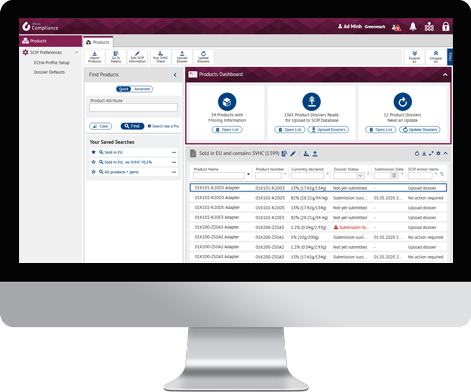
Within this context, IPOINT Compliance provides a structured framework for managing EUDR requirements alongside other product and supply chain regulations. By integrating EUDR-specific rule groups into an established product compliance system, companies can link deforestation-related obligations directly to materials, products, and suppliers, rather than treating EUDR as an isolated process.
This approach enables consistent due diligence, higher data quality, and scalable EUDR compliance by integrating deforestation requirements into existing digital processes. At the same time, IPOINT Compliance allows companies to manage EUDR alongside other regulatory obligations such as REACH and RoHS within a single, integrated product compliance system—supporting long-term regulatory alignment and sustained access to the EU market.