The EU Waste Framework Directive (WFD) is a cornerstone of EU legislation, shaping waste management and sustainability practices across the region. As pressure builds for companies to meet environmental expectations and reporting requirements, WFD compliance has become essential to reducing environmental impact and supporting the circular economy.
In this article, we’ll outline the key requirements of the WFD, who is affected, and how businesses can navigate its complexities to stay compliant..
- WFD: Key Facts at a Glance
- What Is the EU Waste Framework Directive (WFD)?
- Objectives and Requirements of the Directive
- Who Needs to Comply with the WFD?
- SCIP Database: A Key Transparency Mechanism under the WFD
- Risks of Non-Compliance with the EU Waste Framework Directive
- How IPOINT Supports WFD Compliance
WFD: Key Facts at a Glance
-
The EU Waste Framework Directive (WFD) aims to reduce the environmental and health impacts of waste, supporting the circular economy through waste prevention, reuse, and recycling.
-
Key requirements include the waste hierarchy, extended producer responsibility (EPR), separate waste collection, and measures to improve transparency on substances of concern in articles.
-
Depending on their role, manufacturers, importers, distributors, and other companies placing products on the EU market, as well as waste operators, must comply with WFD obligations.
-
The SCIP database collects information on articles containing substances of very high concern (SVHCs) on the REACH Candidate List above 0.1% w/w, improving transparency for safer waste management.
-
Non-compliance can lead to fines, operational disruptions, and reputational damage, making effective compliance processes and tools essential.
What Is the EU Waste Framework Directive (WFD)?
The EU Waste Framework Directive (WFD) is a cornerstone of EU legislation that establishes a comprehensive legal framework for waste management across the European Union. Its primary objective is to protect the environment and human health through waste prevention, reuse, recycling, recovery, and safe disposal practices. A key concept introduced by the WFD is the waste hierarchy, which prioritizes waste prevention, followed by reuse, recycling, and other recovery operations, with disposal as the last resort.
Originally adopted in 2008 and significantly revised in 2018 as part of the EU’s Circular Economy Package, the WFD also introduced strengthened recycling targets and extended producer responsibility requirements. It forms a central pillar of the EU’s circular economy strategy and complements broader policy initiatives such as the EU Green Deal and the Circular Economy Action Plan.
Objectives and Requirements of the Directive
To achieve its objectives, the WFD establishes several key requirements:
-
Waste Hierarchy: The directive establishes a five-step waste hierarchy, prioritizing prevention, followed by preparing for re-use, recycling, other recovery operations, and disposal as the least preferred option.
-
Extended Producer Responsibility (EPR): The WFD requires Member States to establish extended producer responsibility schemes, ensuring that producers bear financial and organizational responsibility for the waste stage of their products’ lifecycle.
-
Separate Collection: The directive strengthens obligations for the separate collection of waste streams to improve recycling rates and prevent recyclable materials from being mixed with residual waste.
-
Substances of Very High Concern (SVHCs): Under Article 9(1)(i), suppliers of articles containing substances of very high concern (SVHCs) on the REACH Candidate List above 0.1% w/w must submit information to the SCIP database. This requirement enhances transparency and supports safer waste treatment and material recovery.
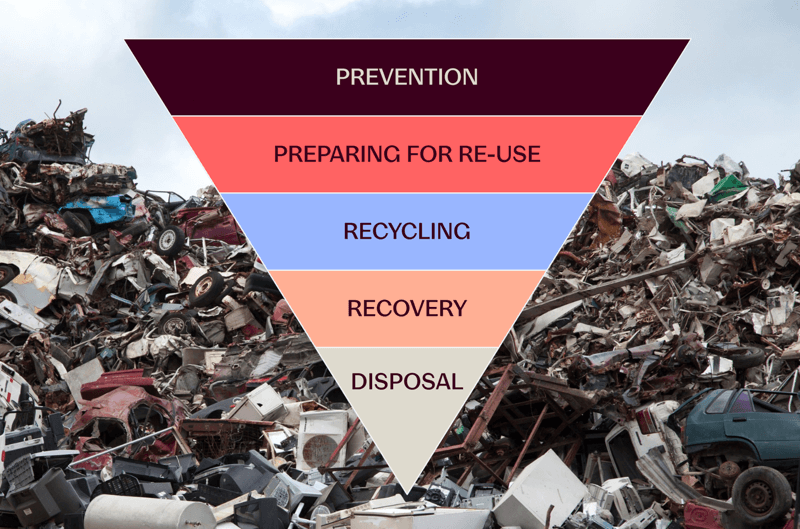
Waste hierarchy according to the EU Waste Framework Directive: prevention → preparing for re-use → recycling → recovery → disposal.
Who Needs to Comply with the WFD?
The EU Waste Framework Directive affects a wide range of stakeholders involved in the lifecycle of products and waste management. Its requirements are implemented through national legislation and apply to different actors depending on their role.
- Manufacturers and Brand Owners
Producers placing products on the EU market are typically subject to extended producer responsibility (EPR) schemes. These require them to take financial and organizational responsibility for the waste stage of their products’ lifecycle and to support collection, recycling, and recovery systems. - Importers
Importers bringing goods into the EU are considered producers under many national EPR regimes and must fulfil the same obligations as EU-based manufacturers for the products they place on the market. - Waste Generators and Treatment Operators
Companies that generate waste must ensure proper classification, documentation, and separate collection in line with national waste legislation. Waste treatment operators must meet strict requirements for handling, recovery, and disposal operations. - Recyclers and Waste Management Firms
These businesses play a critical role in material recovery and must comply with permitting, operational, and reporting requirements for waste treatment processes. - Distributors and Retailers
While their obligations are usually more limited, distributors and retailers may have responsibilities under national EPR schemes and product-specific legislation, for example in relation to take-back systems or providing information to customers.
SCIP Database: A Key Transparency Mechanism under the WFD
The Substances of Concern In articles as such or in complex objects (Products) (SCIP) database is a key transparency mechanism introduced under Article 9(1)(i) of the Waste Framework Directive. It aims to improve the availability of information on substances of very high concern (SVHCs) in articles throughout their lifecycle and to support safer waste treatment and material recovery.
- Purpose of SCIP:
The database collects information on articles placed on the EU market that contain SVHCs from the REACH Candidate List above 0.1 % weight by weight, helping waste operators identify substances that require specific treatment and enabling greater supply chain transparency. - Who Needs to Report:
Companies that manufacture, import, assemble, or distribute articles in the EU containing SVHCs above the threshold must submit data to the database. Non-EU companies are not directly subject to the obligation but must ensure compliance through their EU importers. - Required Data:
Submissions include information to identify the article, the name and concentration range of the SVHC, its location within the article, and safe-use instructions to ensure proper handling at the waste stage. - Challenges and Digital Solutions:
Managing large volumes of structured data across complex supply chains remains a major compliance challenge. Digital tools can automate data collection, reuse upstream information, and streamline submission workflows, significantly reducing the risk of non-compliance. - Regulatory Outlook:
As part of the EU’s Environmental Omnibus initiative 2025, the European Commission has proposed repealing the SCIP database, citing high administrative costs and limited effectiveness for waste operators. In the future, the Digital Product Passport under the Ecodesign for Sustainable Products Regulation (ESPR) is expected to provide a more comprehensive digital solution for substance transparency. Until any legislative change is formally adopted, however, the SCIP reporting obligation remains fully in force.
Risks of Non-Compliance with the EU Waste Framework Directive
Non-compliance with the EU Waste Framework Directive (WFD), as implemented in national legislation, can lead to significant legal and financial consequences. Companies that fail to meet applicable obligations – for example in relation to extended producer responsibility (EPR) schemes, separate collection requirements, waste documentation, or SCIP reporting – may face penalties, loss of market access, and additional operational costs.
Beyond regulatory sanctions, non-compliance can also damage a company’s reputation, as inadequate waste management and lack of transparency on substances of concern are increasingly scrutinized by customers, investors, and authorities. In practice, missing registrations, incomplete data, or non-compliant processes can disrupt supply chains, delay product placements on the market, and create long-term financial and business risks.
Streamline Your Compliance with IPOINT
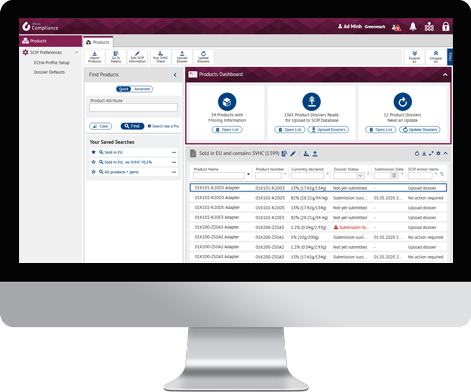
Ensure your business stays compliant with the WFD and other regulations like REACH, RoHS, and WEEE. iPoint’s product compliance software makes it easier to manage complex reporting requirements and enhance supply chain transparency.

How IPOINT Supports WFD Compliance
Navigating the complexities of the EU Waste Framework Directive, especially with the growing demand for accurate waste management and reporting, can be challenging for businesses. Non-compliance with the directive can result in significant legal and operational risks. IPOINT offers scalable solutions to help businesses streamline compliance and reduce these risks.
- Automated Compliance Management
IPOINT's product compliance software simplifies compliance with the WFD, automating key processes such as data collection, product lifecycle management, and regulatory reporting. - Lifecycle Analysis and Transparency
The software provides tools for tracking products across their entire lifecycle, helping businesses meet sustainability and compliance goals while ensuring transparency in their supply chains. - SVHC Tracking and Reporting
iPoint’s solutions support the identification and management of SVHCs, ensuring compliance with REACH and other regulations. - Supply Chain Collaboration
The platform facilitates supplier engagement and collaboration, ensuring that all stakeholders are informed and meet regulatory obligations for product compliance.
For further insights into how IPOINT supports sustainability and compliance, visit the Circular Economy & Sustainability Blog article.