
Partial life cycle views create dangerous blind spots in environmental decision-making. A manufacturing process optimized for minimal production emissions may drive products that consume excessive energy during customer use or generate hazardous waste at end-of-life. Cradle-to-grave Life Cycle Assessments eliminate these gaps by evaluating environmental impacts across a product's complete existence – from raw material extraction through manufacturing, distribution, use, and final disposal.
This guide defines cradle-to-grave methodology, explains applications for consumer products, addresses modeling challenges, and demonstrates how professional tools enable ISO-compliant assessments at scale.
- Cradle-to-Grave: Key Facts at a Glance
- What Does Cradle-to-Grave Mean?
- Key Challenges in Cradle-to-Grave LCAs
- Real-World Application: BRITA Case Study
- How IPOINT Supports Cradle-to-Grave Analyses
- Comprehensive Life Cycle Insights Drive Strategic Value
- Frequently Asked Questions
Cradle-to-Grave: Key Facts at a Glance
-
Cradle-to-grave LCA evaluates environmental impacts across all five life cycle stages: raw material extraction, manufacturing, distribution, use, and end-of-life disposal or recycling.
-
This boundary is especially relevant for consumer products where the use phase contributes significantly to total environmental impact.
-
Complete life cycle boundaries are particularly important for Product Carbon Footprints, Environmental Product Declarations, and broader sustainability reporting when downstream emissions are material.
-
ISO 14040/14044-compliant software helps ensure methodologically sound, transparent, and scalable assessments.
What Does Cradle-to-Grave Mean?
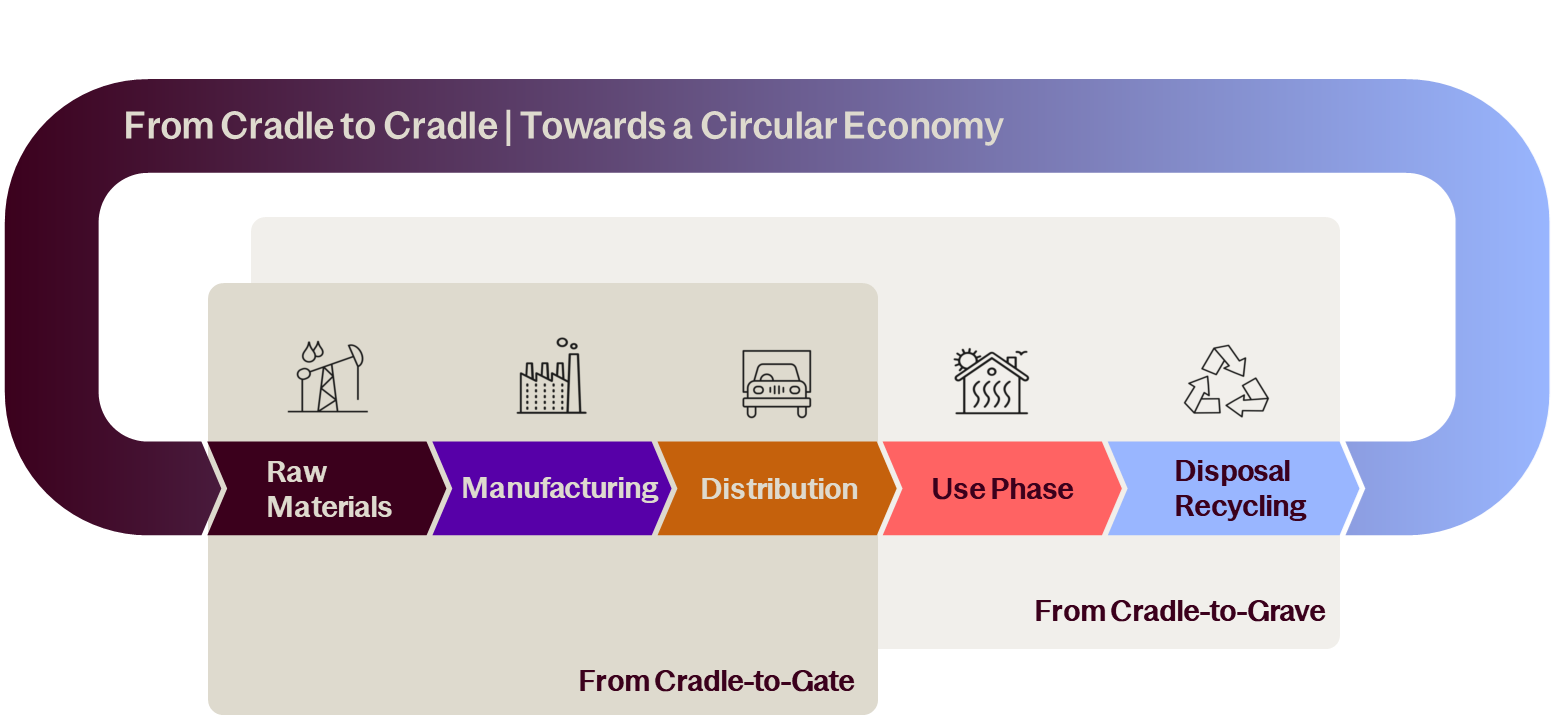
Cradle-to-grave is a Life Cycle Assessment approach evaluating complete environmental impact from raw material extraction through final disposal. The methodology encompasses all five product life cycle stages defined by ISO 14040/14044 standards:
- raw material acquisition
- manufacturing
- distribution
- use
- end-of-life
When to Choose Cradle-to-Grave
Strategic applications for cradle-to-grave boundaries depend on product type, target audience, and regulatory requirements. They include:
- Consumer Products (B2C): Electronics, appliances, and vehicles, where use-phase energy consumption dominates total impact. For example, washing machines and refrigerators often generate most life cycle emissions during customer use.
- Environmental Product Declaration (EPD) and Sustainability Reporting: Complete life cycle boundaries are often necessary when downstream impacts are material and need to be transparently communicated.
- Products with Significant End-of-Life Impact: Products containing hazardous materials or valuable recyclable content where disposal substantially affects environmental performance.
In contrast, cradle-to-gate boundaries end at the factory gate and are mostly used by B2B manufacturers. For a detailed comparison, read our article on LCA life cycle stages.
Cradle-to-Grave for Carbon Footprints
Product Carbon Footprints (PCF) using cradle-to-grave boundaries capture greenhouse gas emissions across the full product life cycle. This includes upstream and manufacturing emissions as well as downstream impacts during product use and end-of-life treatment.
Downstream life cycle stages covered by cradle-to-grave PCFs include:
- Use phase: Emissions associated with product operation, such as customer energy consumption
- End-of-life: Emissions associated with disposal, recovery, or recycling treatment
For corporate carbon footprints, cradle-to-grave product data can support Scope 3 reporting across the value chain. Upstream stages (such as raw material extraction and manufacturing) may inform categories like purchased goods, while downstream stages (such as product use and end-of-life treatment) are relevant for categories like use of sold products and end-of-life treatment.
Key Challenges in Cradle-to-Grave LCAs
Comprehensive life cycle assessment presents specific challenges: sophisticated modeling across diverse scenarios, complex data integration, and methodological decisions that directly influence result reliability.
Modeling the Use Phase
The use phase often represents the most variable and most impactful life cycle stage, requiring representative scenarios that reflect real-world product usage.
Key variables:
- Diverse usage profiles and user behaviors
- Energy consumption variability across regions and grid mixes
- Product lifetime and maintenance assumptions
Solution approaches:
- Define representative scenarios based on market data
- Model regional differences and usage intensities
- Conduct sensitivity analysis on key assumptions
- Document assumptions transparently
End-of-Life and Recycling
End-of-life modeling requires navigating regional infrastructure differences and selecting appropriate allocation methodologies for recycling benefits.
Methodological challenges:
- Regional infrastructure differences in waste management
- Recycling allocation methods (cut-off vs. avoided burden)
- Multiple end-of-life pathways (recycling, landfill, incineration)
Best practices:
- Use weighted scenarios reflecting actual waste statistics
- Apply ISO 14044 allocation guidance consistently
- Document methodology choices transparently
Data Complexity and Quality
Cradle-to-grave assessments demand high-quality data across all five life cycle stages. This requires maintaining consistency between primary supplier data and modeled scenarios, strategically balancing primary versus secondary data sources, and ensuring data quality remains comparable throughout the assessment.
Real-World Application: BRITA Case Study
BRITA conducted comprehensive cradle-to-grave LCAs across its water filter portfolio. The analysis revealed critical insights about resource consumption and optimization opportunities spanning manufacturing through customer use and cartridge disposal.
Result: The assessment showed that BRITA’s water filtration system has a distinctly smaller CO2 footprint when compared to industry data for bottled water.
This case study illustrates how cradle-to-grave boundaries reveal impacts across the full product life cycle and support more strategic sustainability decisions. IPOINT’s Umberto LCA Software enabled the detailed modeling needed for this assessment.

How IPOINT Supports Cradle-to-Grave Analyses
IPOINT's integrated software ecosystem combines LCA expertise with data management capabilities to streamline cradle-to-grave assessments from modeling through regulatory reporting.
Umberto LCA Software
Professional cradle-to-grave modeling requires sophisticated analytical capabilities across all life cycle stages. Umberto’s modeling capabilities include:
- Automated LCA modeling: ISO 14040/14044-compliant workflows for professional environmental assessments
- Flexible system boundaries: Visual definition and transparent modeling of complete product life cycles
- Database integration: Seamless connectivity with ecoinvent, GaBi, and other leading LCI databases
- Scenario analysis: Compare use-phase assumptions and end-of-life pathways systematically
- Export capabilities: Generate outputs for EPDs, PCFs, and broader reporting requirements
Model Complete Product Life Cycles With Professional LCA Software
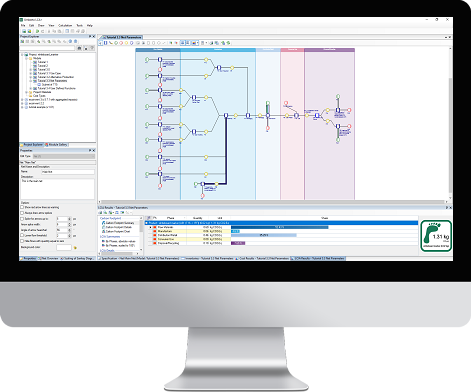
Define comprehensive system boundaries, integrate diverse data sources, and generate ISO-compliant assessments. Umberto enables sophisticated scenario modeling for use phase and end-of-life optimization.

Comprehensive Life Cycle Insights Drive Strategic Value
Cradle-to-grave assessment reveals environmental impacts wherever they occur, enabling targeted improvements rather than burden-shifting. The methodology's complexity demands professional tools and systematic approaches. Organizations mastering cradle-to-grave assessment gain competitive advantages through credible environmental claims, regulatory compliance, and data-driven innovation.
IPOINT's integrated solutions make comprehensive life cycle assessment scalable and repeatable, transforming environmental transparency into systematic capability embedded within product development processes.
WHITEPAPER
Sustainability Intelligence: From Data to Impact
Learn how to turn product and supply chain data into decision-ready insights for PCF, LCA, and CSRD — enabling faster decisions and scalable sustainability impact.

Frequently Asked Questions
What is cradle-to-grave?
Cradle-to-grave is a Life Cycle Assessment approach that evaluates the complete environmental impact from raw material extraction through manufacturing, distribution, use phase, and final disposal or recycling. This comprehensive boundary encompasses all five product life cycle stages.
What is a Life Cycle Assessment (LCA)?
Life Cycle Assessment is a standardized methodology per ISO 14040/14044 for systematically analyzing environmental impacts across complete life cycles. LCA quantifies resource consumption, energy use, emissions, and waste generation from raw material extraction through disposal. The methodology comprises four phases: Goal and Scope Definition, Inventory Analysis, Impact Assessment, and Interpretation. LCA enables objective environmental comparisons and supports data-driven sustainability decisions.
What is a Product Carbon Footprint (PCF)?
Product Carbon Footprint measures total greenhouse gas emissions throughout a product's life cycle, expressed in CO2 equivalents. PCF calculations sum emissions from all stages, applying IPCC Global Warming Potential factors. Cradle-to-grave PCFs capture complete climate impact, including downstream emissions from customer use and end-of-life treatment, enabling meaningful climate strategies that address actual emission sources.
What are the main challenges in cradle-to-grave LCAs?
Key challenges include modeling diverse use scenarios reflecting variable behavior and regional energy differences, selecting appropriate end-of-life scenarios across waste infrastructures, applying recycling allocation methodologies consistently, ensuring data quality across all five stages, integrating primary supplier data with modeled scenarios, and maintaining consistency between upstream data and downstream assumptions. Professional LCA software and systematic data management address these challenges while maintaining ISO compliance.