
Cradle-to-gate analysis has become the foundation of B2B environmental communication as supply chain transparency requirements intensify across EU regulations. This focused Life Cycle Assessment (LCA) approach quantifies environmental impacts from raw material extraction through manufacturing. For manufacturers supplying intermediate products, components, or materials to downstream customers, cradle-to-gate boundaries enable credible environmental declarations without speculating about unknown use phases.
This comprehensive guide defines cradle-to-gate analysis within the LCA framework, explains strategic applications for B2B manufacturers, addresses data quality challenges, and demonstrates how integrated software solutions streamline environmental assessments from supplier engagement through regulatory reporting.
- Cradle-to-Gate: Key Facts at a Glance
- What Does Cradle-to-Gate Mean?
- Key Challenges in Cradle-to-Gate LCAs
- Real-World Application: VinyLoop PVC Recycling Case Study
- How iPoint Supports Companies with Cradle-to-Gate Analysis
- Mastering Cradle-to-Gate for Long-Term Market Success
- Frequently Asked Questions
Cradle-to-Gate: Key Facts at a Glance
-
Cradle-to-gate LCA evaluates environmental impacts from raw material extraction through manufacturing until products leave the factory gate – excluding distribution, use, and end-of-life stages.
-
B2B manufacturers choose this boundary when downstream applications vary significantly or remain unknown, preventing speculative use-phase modeling.
-
Product Carbon Footprints using cradle-to-gate boundaries capture ‘embodied carbon’ and provide a foundation for value chain data exchange; they can also serve as supplier-specific input for Scope 3 calculations within a Corporate Carbon Footprint (CCF).
-
Supply chain data quality determines assessment accuracy. Primary supplier data significantly outperforms generic database estimates.
-
Regulatory drivers including CSRD, CBAM, and Digital Product Passport requirements increase demand for verified cradle-to-gate environmental data.
What Does Cradle-to-Gate Mean?
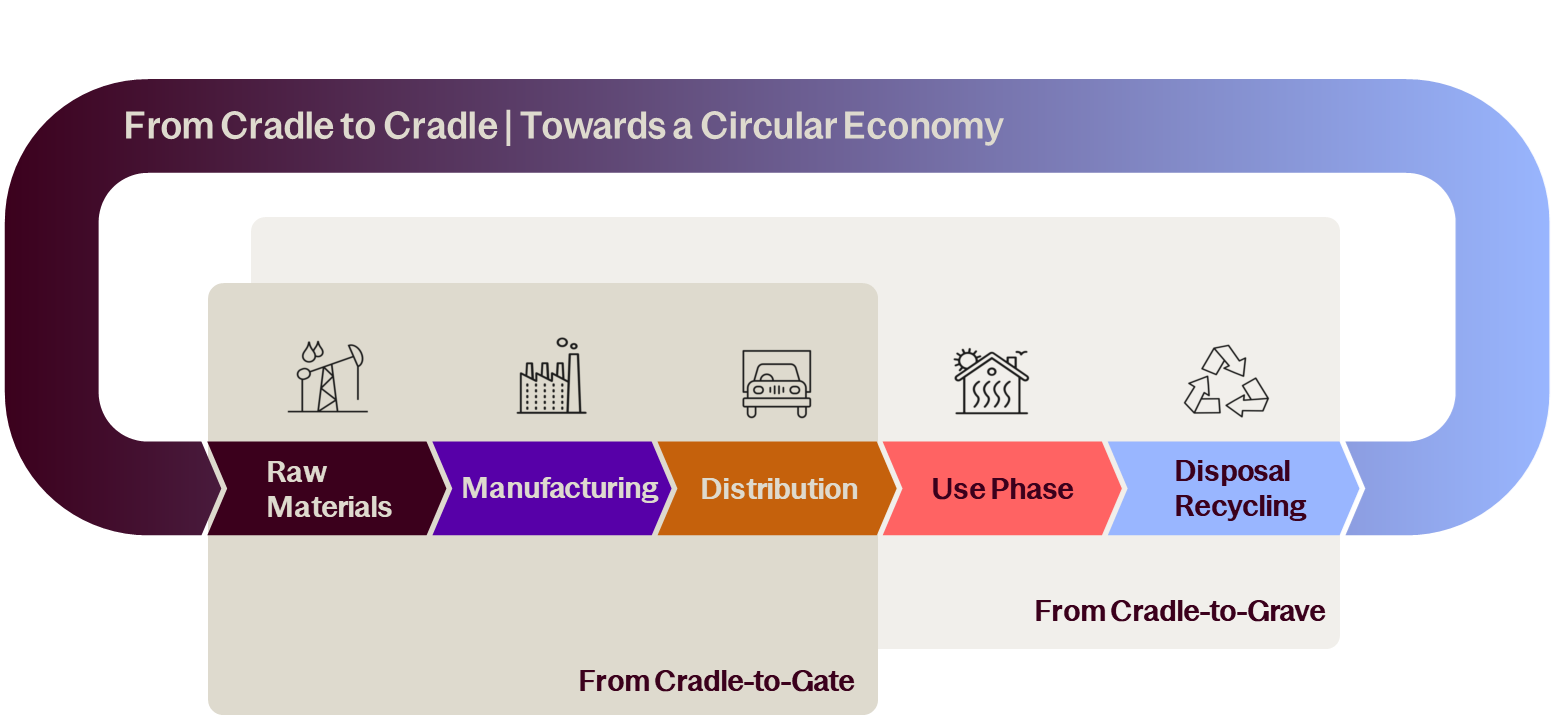
A cradle-to-gate Life Cycle Assessment evaluates environmental impacts from raw material extraction through manufacturing until the product leaves the factory gate. The term combines "cradle" – representing a product's origin through raw material sourcing – with "gate" – marking the factory exit point where manufacturer control ends.
This system boundary sits within the broader LCA methodology framework defined by ISO 14040/14044 standards. Unlike cradle-to-grave assessments that span complete product life cycles, cradle-to-gate analysis focuses specifically on the upstream and manufacturing stages. Gate-to-gate examines single processes in isolation, while cradle-to-cradle emphasizes circular material flows through recycling pathways.
When to Choose Cradle-to-Gate
Strategic applications for cradle-to-gate boundaries include:
- Intermediate Products & Materials: Chemicals, metals, textiles, and components with multiple end-use applications where use-phase impacts depend entirely on downstream integration.
- B2B Products: Components and materials sold to other manufacturers who incorporate them into final products. Use phases remain unknown or highly variable across customer applications.
- Supply Chain Transparency: Manufacturers provide verified environmental data enabling downstream customers to build comprehensive cradle-to-grave assessments using actual supplier data rather than generic database averages.
- EPD Creation: Business-to-business Environmental Product Declarations typically employ cradle-to-gate boundaries, preventing double-counting when customers integrate supplier declarations.
- Early-Stage Assessment: Quick environmental baseline establishment before investing in a comprehensive cradle-to-grave analysis requiring use-phase data collection.
Cradle-to-Gate and Product Carbon Footprints
Product Carbon Footprints (PCF) quantify greenhouse gas emissions at the product level across defined lifecycle stages. A cradle-to-gate PCF captures "embodied carbon" or "upfront carbon" – emissions generated from raw material extraction through manufacturing before the product reaches the customer.
For B2B manufacturers, cradle-to-gate PCFs are particularly relevant because they provide product-specific emissions data for intermediate goods, materials, and components without requiring assumptions about downstream use or end-of-life scenarios. These data can also support downstream customers in their corporate carbon accounting, for example as an input for Scope 3 calculations, while remaining clearly defined as product-level metrics.
This boundary is particularly important for:
- Product-Level Carbon Transparency: Quantify and communicate the embodied carbon of materials, components, and intermediate products.
- Standardized Data Exchange: PACT methodology enables consistent cradle-to-gate PCF communication across supply chains.
- Regulatory and Customer Requirements: CSRD, CBAM, and Digital Product Passport initiatives are increasing demand for reliable upstream emissions data.
- Industry Integration: Automotive IMDS systems increasingly support material-level environmental data based on cradle-to-gate boundaries.
Cradle-to-gate PCF data can also serve as supplier-specific input for downstream Scope 3 calculations, particularly for purchased goods. In this context, product-level emissions data complement the Corporate Carbon Footprint (CCF) by improving data accuracy compared to generic emission factors.
Key Challenges in Cradle-to-Gate LCAs
While cradle-to-gate analysis offers practical advantages, several methodological and data-related challenges must be addressed to ensure reliable results.
Supply Chain Data Availability & Quality
Primary data gaps represent the most significant challenge. Upstream suppliers often lack access to environmental data or are hesitant to share proprietary information. Generic database data may not reflect specific production conditions, regional energy mixes, or supplier-specific efficiency levels.
Data quality hierarchy prioritizes primary supplier data over secondary database information or proxy estimates. However, multi-tier supply chain visibility decreases dramatically beyond Tier 1 suppliers.
Solution approaches:
- Systematic supplier engagement programs with standardized data requests
- Environmental data exchange platforms enabling transparent communication
- IPOINT's Impact Exchange facilitates structured supplier data collection across complex supply chains
Variability & Comparability
Geographic variation complicates tracing. Identical materials from different regions exhibit distinct environmental profiles due to variations in electricity grid mixes, transportation distances, and production technologies.
Allocation challenges arise when production processes yield multiple products simultaneously. ISO 14044 provides allocation methodologies, but choices significantly influence results.
Comparability requirements demand identical system boundaries and functional units for valid product comparisons. Product Category Rules (PCRs) provide standardized methodologies ensuring industry-wide consistency.
Best practices:
- Conduct scenario analysis, testing key assumptions
- Document allocation decisions transparently
- Use powerful software solutions like IPOINTs Umberto with parametric modeling for systematic sensitivity analysis
Risk of Results Misinterpretation
Cradle-to-gate analysis provides an incomplete environmental picture by excluding potentially significant use-phase and end-of-life impacts. Products with low cradle-to-gate emissions may generate substantial impacts during customer use, particularly relevant for energy-consuming equipment.
Communication imperatives:
- Clearly state system boundaries when presenting results
- Avoid misleading comparative claims between products with different boundaries
- Comply with ISO 14040/14044 documentation requirements for exclusions
- Consider phased approaches: establish cradle-to-gate baseline, expand scope as data matures
Real-World Application: VinyLoop PVC Recycling Case Study
VinyLoop's chemical recycling process transforms PVC waste from cables and tarpaulins into recycled compound material. A cradle-to-gate LCA compared VinyLoop recycled PVC compound against virgin PVC production to quantify environmental benefits.
Methodology: The analysis included chemical dissolution, material recovery, and compound production through the factory gate. Despite energy-intensive recycling steps, results demonstrated a 46% reduction in primary energy demand and a 39% reduction in greenhouse gas emissions compared to virgin material production.
This case study illustrates how cradle-to-gate boundaries enable meaningful environmental comparisons between alternative materials while focusing on stages under direct manufacturer control. IPOINT's Umberto LCA Software provided the detailed process modeling capabilities required for this assessment.

How IPOINT Supports Companies with Cradle-to-Gate Analysis
IPOINT's integrated software ecosystem combines LCA expertise with supply chain data management to streamline cradle-to-gate assessments from data collection through reporting.
Umberto LCA Software
Professional cradle-to-gate modeling requires robust analytical capabilities. Umberto offers:
- ISO-compliant methodology: LCA workflows following ISO 14040/14044 standards
- Flexible boundaries: Intuitive cradle-to-gate scope definition with visual system representation
- Comprehensive databases: Seamless integration with ecoinvent and leading LCI databases
- Scenario analysis: Real-time comparison of material alternatives and supplier options
- Multi-impact assessment: Evaluate carbon footprint alongside water consumption, resource depletion, and toxicity
- Export capabilities: Generate LCA & EPD reports, PCF documentation, CSRD disclosures
Model Cradle-to-Gate Assessments with Professional LCA Software
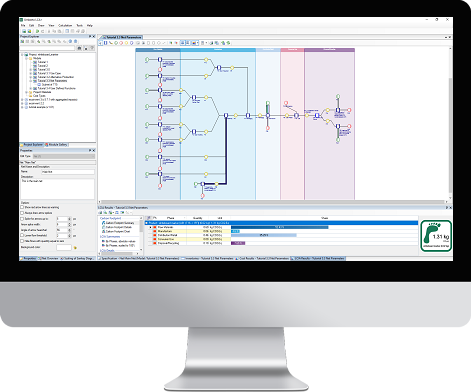
Define precise system boundaries, integrate supplier data, and generate ISO-compliant environmental assessments. Umberto enables scenario analysis and multi-impact evaluation for data-driven product optimization.

Mastering Cradle-to-Gate for Long-Term Market Success
Cradle-to-gate analysis provides a pragmatic starting point for environmental assessment of manufactured products, enabling transparent B2B environmental data exchange without speculative use-phase modeling. Success depends on supply chain data quality and transparent boundary communication with stakeholders.
As regulations, including CSRD and Digital Product Passport requirements, intensify, cradle-to-gate environmental data transitions from a competitive differentiator to a market access prerequisite. Organizations that establish systematic data collection processes and professional LCA capabilities gain significant advantages in sustainability-driven markets.
IPOINT's comprehensive solutions streamline the entire process – from automated supplier data collection through ISO-compliant assessment and regulatory reporting – transforming environmental transparency from compliance burden into strategic asset.
WHITEPAPER
Sustainability Intelligence: From Data to Impact
Learn how to turn product and supply chain data into decision-ready insights for PCF, LCA, and CSRD — enabling faster decisions and scalable sustainability impact.

Frequently Asked Questions
What is cradle-to-gate in LCA?
Cradle-to-gate is a Life Cycle Assessment system boundary covering environmental impacts from raw material extraction through manufacturing until products leave the factory gate. This boundary excludes distribution, use phase, and end-of-life stages. The approach focuses on impacts under direct manufacturer control and proves particularly relevant for B2B products where downstream applications vary significantly. Cradle-to-gate assessments form the foundation for Environmental Product Declarations, Product Carbon Footprints, and supply chain environmental data exchange.
When should companies use cradle-to-gate analysis?
Companies should use cradle-to-gate analysis when: (1) producing intermediate products or materials with multiple end-use applications where use-phase impacts depend on customer integration, (2) operating in B2B markets where customers require product-level environmental data for their own assessments, (3) lacking visibility into downstream use patterns or end-of-life management, (4) creating Environmental Product Declarations for business customers, (5) establishing initial environmental baselines before investing in comprehensive cradle-to-grave analysis, or (6) responding to customer requests for Product Carbon Footprints and supplier-specific data that can be used as input for Scope 3 calculations within a Corporate Carbon Footprint (CCF).
What is a Product Carbon Footprint (PCF)?
A Product Carbon Footprint quantifies total greenhouse gas emissions across a product's lifecycle, expressed in CO₂ equivalents. Cradle-to-gate PCFs focus specifically on "embodied carbon" – emissions from raw material extraction through manufacturing. These cradle-to-gate carbon footprints enable standardized environmental data exchange across supply chains using frameworks such as the PACT methodology. B2B manufacturers increasingly provide cradle-to-gate PCF data to downstream customers to support their Corporate Carbon Footprint (CCF), for example as supplier-specific input for Scope 3 calculations, while also addressing regulatory requirements such as CSRD, CBAM, and Digital Product Passport initiatives.
What standards govern cradle-to-gate assessments?
Cradle-to-gate assessments follow ISO 14040 and ISO 14044 standards defining LCA principles, framework, requirements, and guidelines. These standards mandate clear documentation of system boundaries, functional units, data quality, and allocation methods. For Product Carbon Footprints, additional guidance comes from the GHG (greenhouse gas) Protocol Product Standard and ISO 14067.