
Industrial engineering and manufacturing of products is always accompanied by the extraction and consumption of raw materials from nature and the use of land. Furthermore, pollutants are emitted into the soil, air and water during the production process and along the entire supply chain.
- Sustainable Manufacturing: Key Facts at a Glance
- What Is Sustainable Manufacturing?
- Goals of Sustainable Manufacturing
- Opportunities and Advantages for Companies
- Regulatory Drivers: Why Sustainable Manufacturing Is Now a Compliance Issue
- Environmental and Efficiency Technologies
- Concepts & Methods
- The Product Life Cycle – from Cradle to Grave
- We Support You to Enable Sustainable Production
- Frequently Asked Questions
Sustainable Manufacturing: Key Facts at a Glance
-
Sustainable manufacturing integrates environmental, social, and economic goals across the entire product life cycle – from raw material extraction to end-of-life disposal.
-
Core methods include Life Cycle Assessment (LCA), Product Carbon Footprint (PCF), circular economy strategies, and eco-efficiency analysis.
-
Digital technologies such as AI, digital twins, and IoT monitoring are now central enablers of green production.
-
Regulatory frameworks such as the EU's CSRD make sustainability reporting mandatory for large manufacturers – including US companies with EU operations.
-
Sustainable manufacturing reduces costs, strengthens competitive positioning, and secures long-term business resilience.
What Is Sustainable Manufacturing?
The aim of sustainable manufacturing is to ensure that the production of goods conserves resources and preserves the regenerative capacity of the environment. Sustainable products secure the natural foundations of life for future generations, which requires a new approach to research, design, and manufacturing.
Rather than treating environmental impact as a secondary concern, sustainable manufacturers integrate it into every decision – from sourcing raw materials to packaging and distribution. This cradle-to-grave perspective is what distinguishes genuinely sustainable production from simple efficiency improvements.
Goals of Sustainable Manufacturing
An environmentally compatible production pursues several interdependent individual goals:
- Avoidance of harmful emissions into the environment
- Efficient use of energy and resources
- Switching to renewable energies
- Use of sustainably produced resources
- Waste avoidance and creation of material cycles & recycling
- Restoring and maintaining the biological diversity of ecosystems
Opportunities and Advantages for Companies
Sustainable product policy offers a wide range of opportunities and advantages for companies:
- Cost reduction through improved material and energy efficiency
- Competitive advantages over the marketplace
- Adaptation to changes in consumer behavior
- Increasing the attractiveness for skilled workers
- Sustainable products ensure the long-term success of the company
Regulatory Drivers: Why Sustainable Manufacturing Is Now a Compliance Issue
Sustainability in manufacturing is increasingly a compliance requirement, not just a strategic choice. The EU's Corporate Sustainability Reporting Directive (CSRD) requires companies with more than 1,000 employees and annual turnover above €450 million to report on their environmental and social impact. US-based manufacturers with EU operations fall within this scope as well.
Central to this reporting is the Scope 1/2/3 framework. Scope 1 covers direct emissions from owned operations, Scope 2 addresses emissions from purchased energy, and Scope 3 captures all indirect emissions across the supply chain and product use phase. Mapping and reducing these emissions is rapidly becoming a baseline expectation for supplier partnerships, public procurement, and investor relations.
Environmental and Efficiency Technologies
Achieving the sustainability goals requires an all-encompassing modernization of production systems and the entire economy. New environmental and efficiency technologies play a key role here. Below are some examples:
- Electric and fuel cell drives
- Electro-chemical and thermal storage of energy
- Combined heat and power
- Bioplastics and composite materials
- Digital networking of systems and supply chains
- AI-driven process optimization and predictive maintenance
- Digital twins for real-time simulation and carbon impact modeling
- IoT-based energy and material flow monitoring
AI and digital twin technologies are reshaping how manufacturers identify inefficiencies, simulate process changes, and reduce emissions at scale. For a deeper look at how digitalization drives green production, read our article on building a digital circular economy.
Concepts & Methods
In the literature as well as in practice there are various concepts, methods and instruments to make the production of goods more environmentally friendly:
- Material flow analysis and management
- Sustainable supply chain management
- Sustainable product design
- Circular Economy
- Product Carbon Footprints
- Life Cycle Assessment (LCA)
- Eco-efficiency analysis
The Product Life Cycle – from Cradle to Grave
To achieve sustainable products, it is not enough to look only at the manufacturing phase of the product. Rather, the entire life cycle must be included in the analysis and evaluation.
- Product development & design
- Procurement of raw materials
- Production
- Distribution & logistics
- Product use
- Disposal & Recycling (End of Life)
We Support You to Enable Sustainable Production
Umberto - the LCA Software for Experts
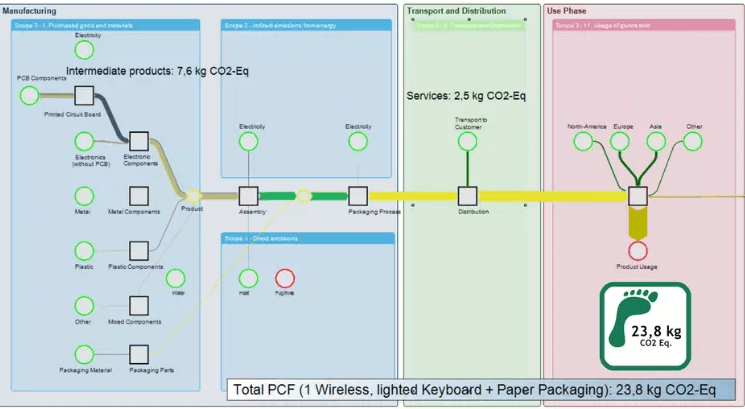
Using our LCA software Umberto, you can create clearly and transparently life cycle assessments of your products. With integrated cost accounting - partial and full cost accounting as well as material flow cost accounting (MFCA) - you not only increase the sustainability but also the efficiency of your production system.
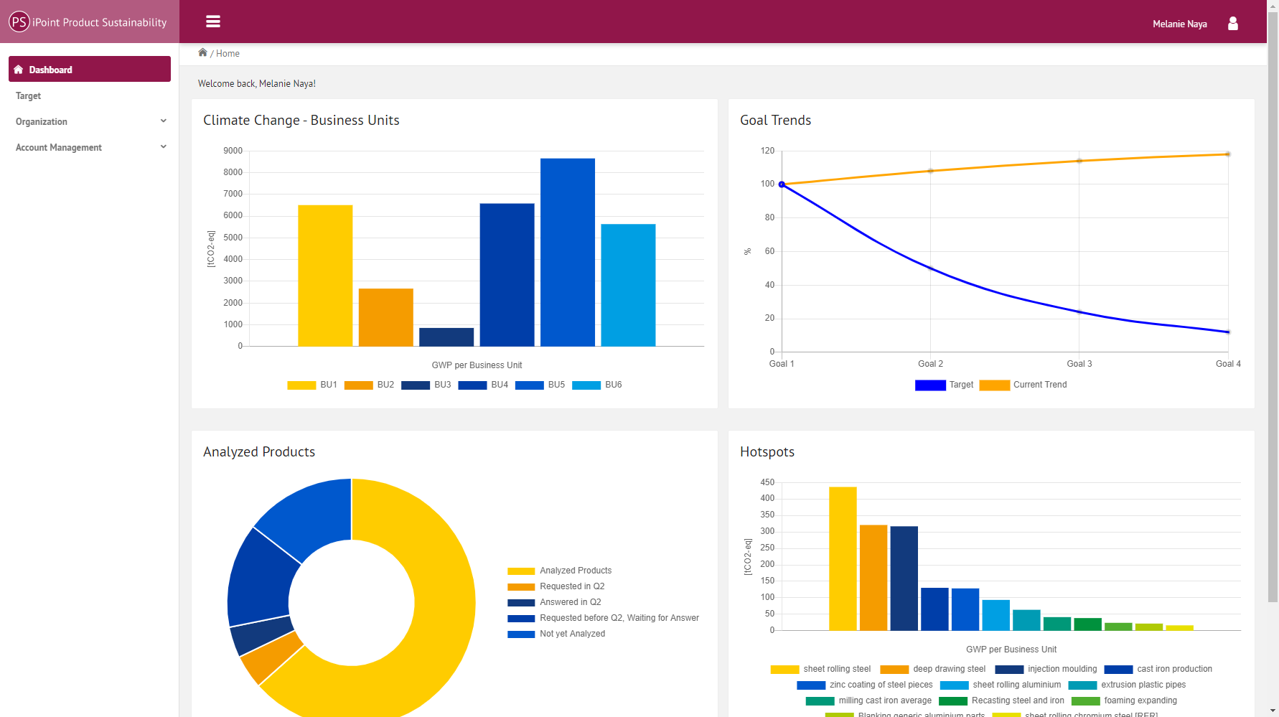
Take the next step and automate the creation of PCFs and LCAs, and integrate the results into other business processes with our holistic product sustainability software.

Alternatively, our team of experts of LCA consultants and environmental engineers is at your disposal. We are happy to support you individually step by step up to the complete analysis of the environmental impacts of your products. Contact our sustainability consulting team now to make the manufacture of your products more sustainable.
Frequently Asked Questions
What is the meaning of sustainable manufacturing?
Sustainable manufacturing means producing goods in ways that minimize environmental impact, conserve natural resources, and preserve the regenerative capacity of ecosystems. It covers the entire product life cycle – from raw material extraction through production, use, and end-of-life disposal.
What is an example of sustainable manufacturing?
A practical example is a manufacturer using Life Cycle Assessment (LCA) to identify the most emission-intensive stage of its production and then switching to renewable energy at that point. Other examples include closed-loop material cycles, water recycling systems, and designing products for disassembly and reuse.
What are the main goals of sustainable manufacturing?
The core goals are to avoid harmful emissions, use energy and resources efficiently, transition to renewable energy, use sustainably produced materials, minimize waste, and restore biodiversity. These goals are interdependent and typically require changes across design, procurement, and production.
How does Life Cycle Assessment (LCA) support sustainable manufacturing?
LCA is the primary method for measuring a product's environmental impact across its entire life cycle – from raw material extraction to disposal. It identifies environmental hotspots, supports data-driven design decisions, and provides the evidence base needed for sustainability reporting and carbon footprint disclosures.
What regulatory requirements are driving sustainable manufacturing?
The EU's Corporate Sustainability Reporting Directive (CSRD) requires large companies to report on environmental and social performance, including Scope 1, 2, and 3 emissions. US manufacturers with EU operations are directly affected. This makes robust environmental data collection and LCA-based measurement essential.
What role do digital technologies play in sustainable manufacturing?
AI, digital twins, and IoT sensor systems enable real-time monitoring of energy consumption and emissions, simulate process changes before implementation, and optimize material flows. This reduces waste and resource use while maintaining production efficiency – making digital tools a core enabler of sustainable manufacturing today.